
Can a HELOC-Funded ADU Pay for Itself? I Built One in Austin to Find Out
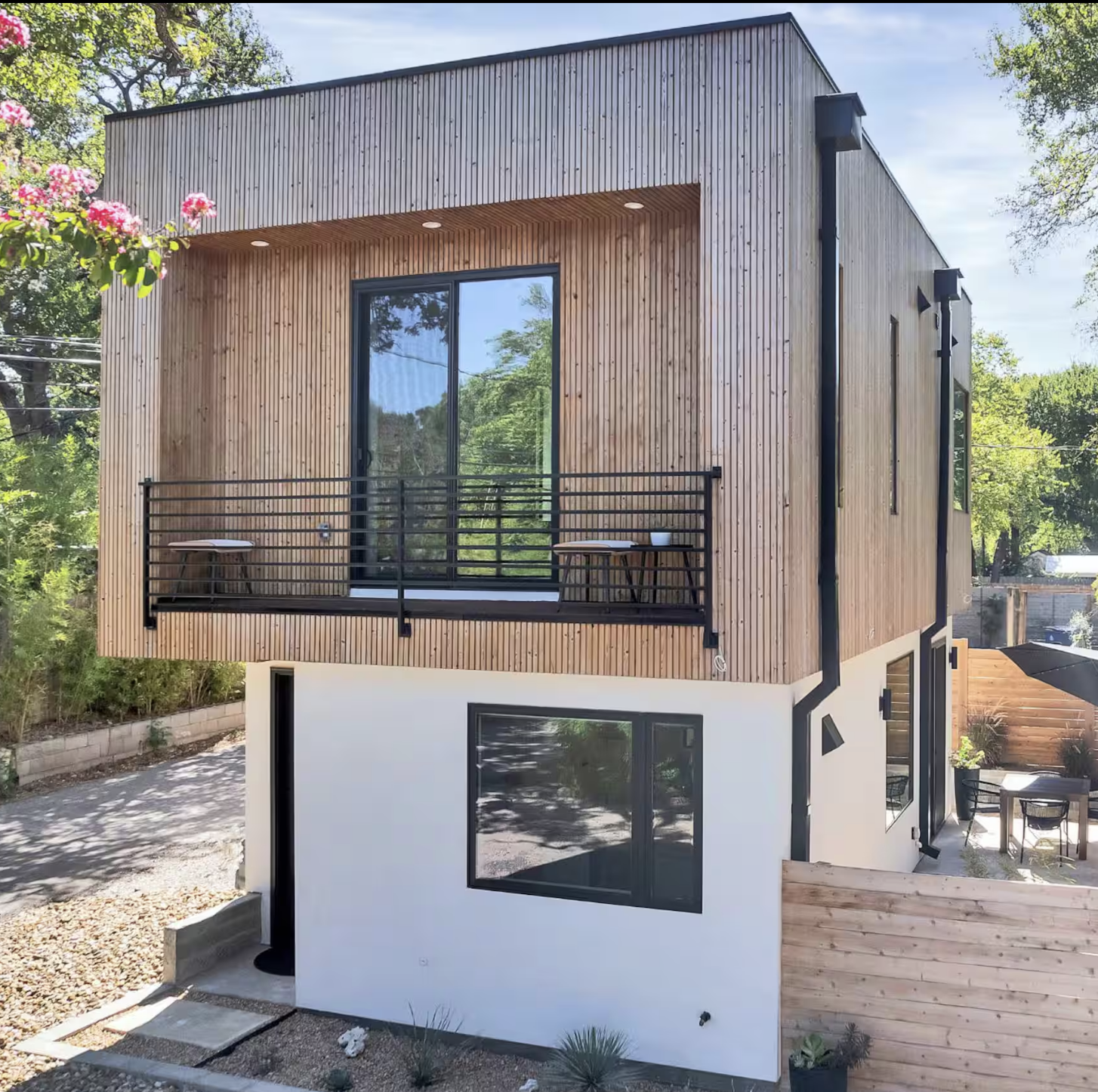
Short answer: Mine does. I pulled equity out of my primary home to build an accessory dwelling unit in my own backyard. It now brings in roughly $70,000 a year, which covers the HELOC payment and leaves profit on top. This is my property, not a client's, so I can tell you what it cost, what went wrong, and what I would do differently.
Why I did it
I had equity sitting in my primary residence doing nothing, and a backyard doing almost as little. Most people in that position either refinance into a worse rate or leave the equity alone.
The third option is to borrow against it and build something that pays the loan back. That only works if the thing you build earns more than the debt costs. So the entire question was whether an ADU in this location would clear that bar.
I drew roughly $250,000 on the HELOC and supplemented it with my own funds, for a total build of about $400,000.
I am publishing those numbers because the ones people usually quote for ADUs are too low, and investors budget off them and then get hurt. This was a full two-story build, not a garage conversion.
What I built
A two-story detached unit in Japandi style, which I designed myself. Two bedrooms, two and a half baths, sleeping five, set among the oak trees that give it its name.
- TypeDetached ADU, two-story
- Beds / Baths2 BR / 2.5 BA
- Sleeps5
- DesignJapandi, owner-designed
- LocationMueller, walkable
- Austin STR permitSTR-2024-78864
The design was not decoration. Mueller and Cherrywood are walkable, close to downtown, UT, and major employers, and the guests that market attracts will pay for something that feels considered. A generic build in the same spot does not earn the same nightly rate.
When I permitted this build, Austin allowed two units per lot. The city now allows up to three.
What went wrong
Construction finished in March 2024. It did not host a single guest until August 2024.
My neighbor's garage caught fire. The damage ran into my project and turned into an insurance claim, and the claim plus the repairs cost me five months between a finished building and a booking calendar.
Nobody includes that in an ADU pro forma. I did not either. Five months of carrying the HELOC on a building that was done but could not earn is the part of this story I would want to know about if I were the one deciding.
If you build one of these, your timeline will slip. Maybe not for a fire, but for something. Budget for carrying costs past your completion date rather than assuming revenue starts the day the final inspection passes.
What it earns
Roughly $70,000 a year. That covers the HELOC payment, with profit left over. The cost of developing it is being paid back by the revenue it produces.
It is a Guest Favorite rated 4.97 across 121 reviews. I manage it myself, which is both why the numbers work and why it is a real job rather than a passive investment.
The part most people miss: it is three things at once
1. An income property
The revenue covers the debt that built it. That is the headline, and it is the part that made the decision straightforward.
2. A guest house for family
When family visits, they stay there. I block the calendar. That has real value that never shows up in a spreadsheet, and it is a large part of why I would do this again even if the returns were thinner.
3. A second property I can sell on its own
The lot can be condominiumized, so each unit can be owned and sold separately instead of trading as one package. Three conditions have to hold: the building has to meet Austin code, it has to be properly permitted, and the units need separate utilities.
That last one is the trap. Separate meters are a decision you make during construction. Build the ADU on shared utilities because it is cheaper and faster, and you have quietly removed this exit before you ever knew you wanted it. It is one of the cheapest options you will ever buy at the time, and one of the most expensive to add later.
So the ADU is not an outbuilding attached to my house. It is a separate asset with its own exit, which changes the math considerably. The build is not only producing income, it is producing a salable property.
What I would tell you before you do this
The reason this worked is not that ADUs are magic. It is that the location supports a nightly rate high enough to service the debt. Build the same unit somewhere with weaker demand and you have taken equity out of your home to create a monthly payment.
Run that number first. If the realistic revenue does not comfortably exceed the loan payment plus operating costs, the project does not work no matter how good the design is.
Second, budget past your completion date. Mine sat finished and empty for five months.
Third, put in separate utilities even if nobody is asking you to. It is what keeps the option to sell the units separately open.
Fourth, this is not passive. I handle the hosting. The returns reflect that.
Who this is not for
If you do not have meaningful equity, if your lot or your deed restrictions will not allow it, if your location cannot support strong nightly rates, or if you are not prepared to run a hosting business, this is the wrong project. Taking debt against your home to build something that does not earn is the worst outcome in real estate, and it is avoidable with honest math up front.
Wondering whether your lot could do this?
I have built one and I run it. Let's look at your equity, your lot, and what the revenue would realistically be before you talk to a builder.
Book A CallJulie Hutchison is a licensed Texas real estate agent, not a CPA, attorney, lender, or land use consultant. Nothing on this page is tax, legal, lending, or investment advice. Results described are specific to one property and do not predict future results. Zoning, permitting, platting, and ownership rules change and vary by lot, and private deed restrictions and HOA covenants may further restrict what is allowed. Verify current requirements with the City of Austin and your own attorney before relying on anything here. Hutchison Property Group, brokered by eXp Realty.